
Karpowership's Ninth Seatrium FSRU Conversion Broadens Its LNG Supply Play
Seatrium will convert LNGT Akdeniz for Karpowership, the partners' ninth FSRU project, with work scheduled to begin in the first quarter of 2027.
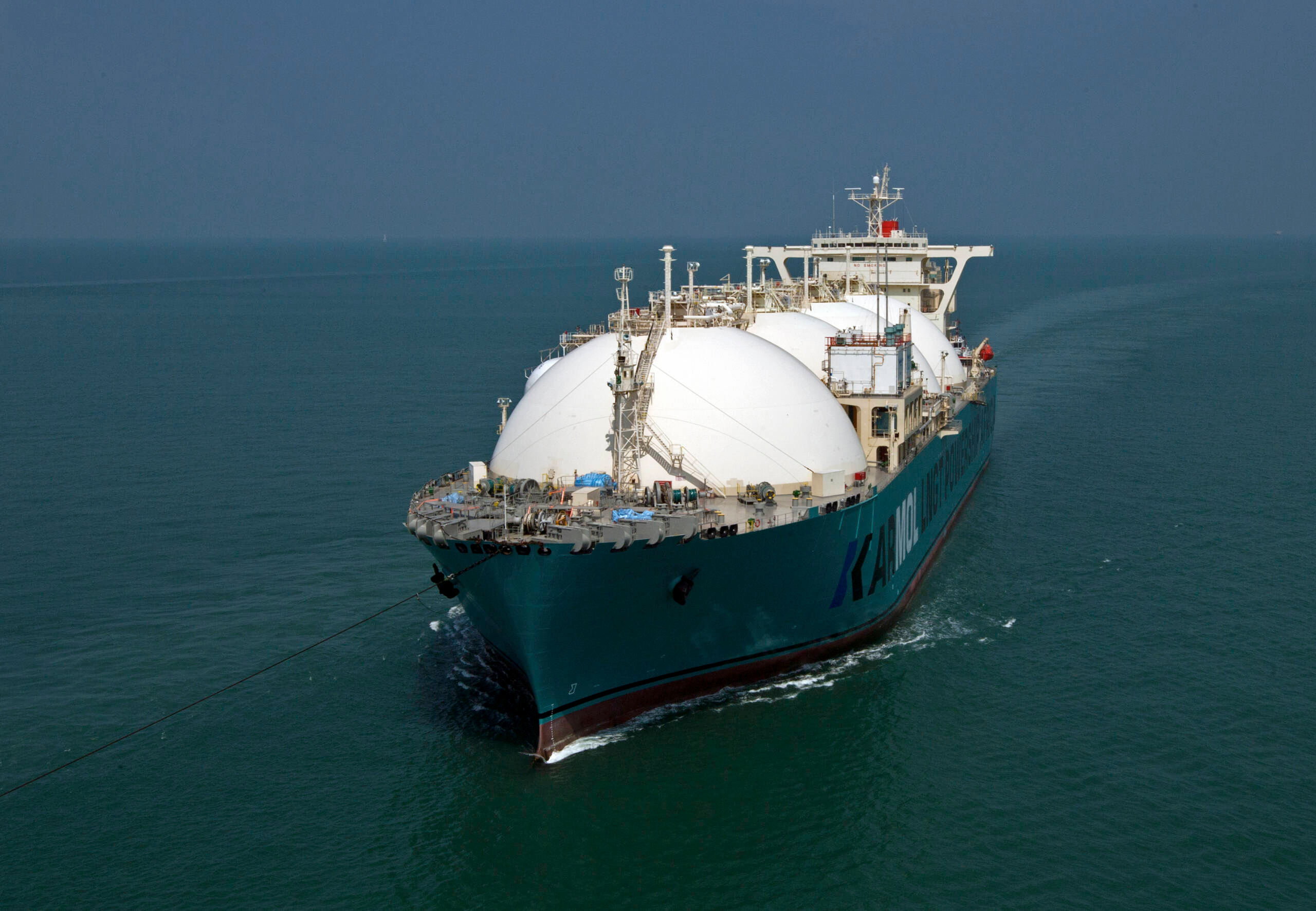
Seatrium and Karpowership said on 5 October that they would convert an LNG carrier into the LNGT Akdeniz floating storage and regasification unit. The award is their ninth FSRU conversion project since 2018, with work scheduled to begin in the first quarter of 2027.
Seatrium’s scope covers engineering, vessel conversion, integration, installation and commissioning of the regasification equipment and associated systems. The yard puts the unit’s regasification capacity at up to 600 million standard cubic feet per day. Once completed, LNGT Akdeniz will join the LNG fleet of Kinetics, Karpowership’s energy-transition initiative.
Kinetics previously identified the 143,000-cubic-metre LNG carrier Arctic Voyager as the conversion candidate. The Moss-tank vessel is due for delivery as an FSRU in the third quarter of 2028. Kinetics is positioning it as a utility-scale regasification asset that can be configured for a range of import projects.
The order extends a series-build relationship between Seatrium and Karpowership. LNGT Türkiye sailed away in September, completing an earlier seven-vessel conversion programme. The eighth unit, LNGT Karadeniz, is under conversion, while LNGT Akdeniz is the second next-generation FSRU to become a firm project under the companies’ 2025 letter of intent. That framework covers three LNG carrier conversions and the potential integration of up to six new-generation Powerships.
Karpowership’s model goes beyond placing floating power plants in coastal markets. It combines LNG receiving, storage and regasification with power generation: LNG is delivered by sea, stored and regasified on the FSRU, and then supplied by pipeline to a Powership or a local gas network. For markets without established onshore import terminals, the combination can shorten the route to new gas and power capacity.
Senegal is one example. KARMOL, the former joint venture between Karpowership and Mitsui O.S.K. Lines, deployed an FSRU and connected it by subsea and onshore pipelines to a Powership and a land-based power plant. The Powership initially had 235 MW of capacity. As Karpowership targets a wider set of gas-import opportunities, an FSRU’s commercial value increasingly depends not only on storage volume but also on send-out pressure, flow rate, mooring arrangement and compatibility with the downstream network.
For Seatrium, repeat awards allow engineering experience and supply chains to be carried from one conversion to the next, even though each vessel must still be integrated around its donor hull, regasification package and target market. LNGT Akdeniz indicates that Karpowership is extending its LNG-to-power experience into a broader floating gas-import infrastructure business.