
Floating Wind Could Supply More Than One-Third of UK Offshore Capacity by 2050
RenewableUK expects UK offshore wind capacity to reach about 115 GW by 2050, including roughly 40 GW of floating wind, as development moves into deeper and more remote waters.
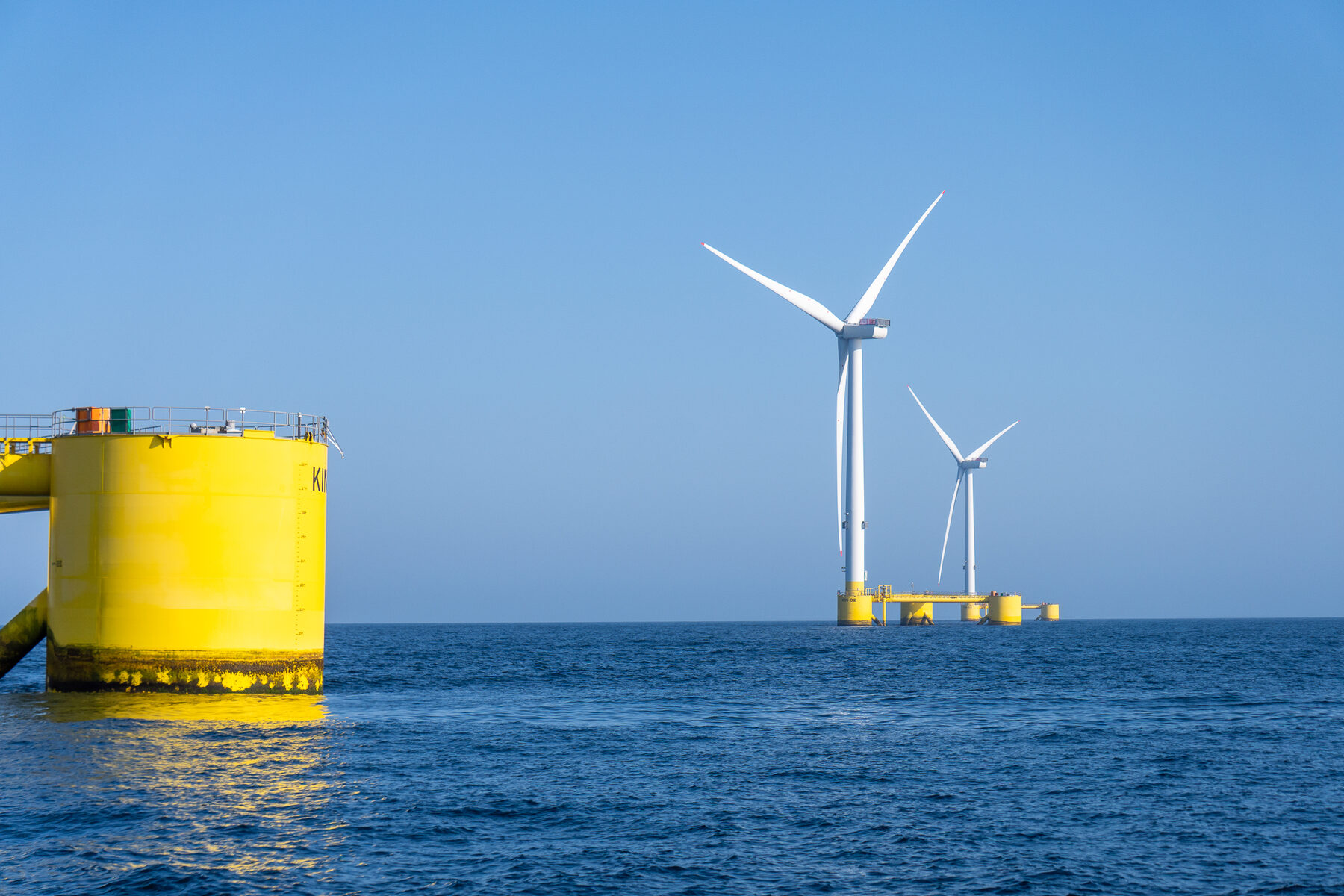
A new RenewableUK report forecasts that the United Kingdom could have about 115 GW of offshore wind capacity by 2050, with around 40 GW supplied by floating projects. That would put floating wind at more than one-third of the country’s offshore total and move the technology from demonstration schemes towards commercial-scale development.
New Projects Are Moving into Deeper Water
UK offshore wind expansion over the past decade has relied mainly on fixed-bottom foundations. Monopiles and jackets are mature technologies, and most projects have been concentrated in relatively shallow water. As the most attractive shallow-water sites are developed, new projects are moving farther offshore and into greater water depths.
At depths of around 60 metres and beyond, the cost of manufacturing and installing fixed foundations rises rapidly and floating solutions begin to become more competitive. This has also driven floating-wind programmes in Norway, Japan, South Korea and other markets.
Floating Wind Requires a Full Offshore Engineering Supply Chain
A floating wind farm requires more than turbines. It also needs large floating substructures, mooring systems, anchors, subsea cables, tow-out and installation, offshore logistics and long-term maintenance. Many of these activities closely resemble work developed for offshore oil and gas.
Semi-submersible and tension-leg concepts, large steel structures, offshore installation and mooring design have all been applied extensively in FPSO and offshore-platform projects over several decades.
International contractors including Seatrium, Saipem, Technip Energies and SBM Offshore have already entered floating-platform, EPC or offshore-installation work as they seek to apply established offshore capabilities in renewable energy.
Chinese Offshore Companies Are Building Experience
CIMC Raffles, Wison New Energies, COOEC, China Merchants Industry and ZPMC have participated in floating-wind projects and are building experience in substructure design and fabrication, offshore installation equipment and large steel structures.
As deepwater wind development accelerates in Europe, Asia and the United States, competition will extend beyond turbine manufacturing to platform construction, engineering, mooring, installation and O&M support. Floating wind could become a significant new market for the offshore engineering supply chain.