
bp and TechnipFMC to Advance Standardised 20K Subsea Technology
bp and TechnipFMC have signed an MoU to advance technology development and standardised deployment of 20K subsea tree systems for deep high-pressure projects in the US Gulf of Mexico.
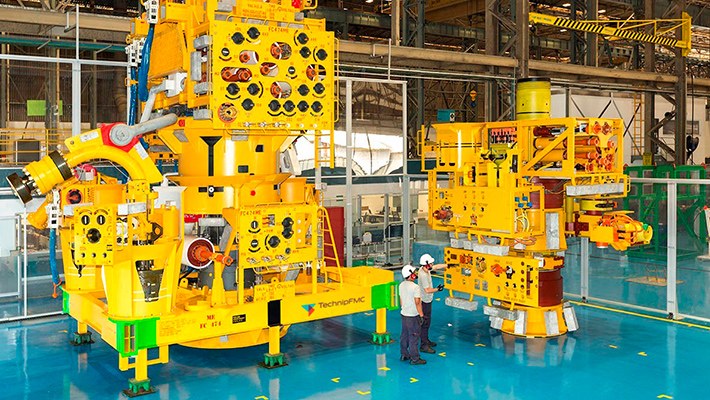
TechnipFMC announced on 20 October 2026 that it had signed a memorandum of understanding with BP Exploration & Production Inc., a bp subsidiary. The companies will collaborate on 20K subsea tree systems for bp’s deep, high-pressure developments in the US Gulf of Mexico.
Under the memorandum, the companies will identify potential projects early and jointly advance subsequent technology development to improve schedule and delivery certainty. The announcement did not disclose equipment quantities, contract value or a specific project list. The commercial scale will become clearer as individual projects and formal contracts progress.
20K represents one of the most advanced high-pressure technologies in deepwater production. The term refers to equipment rated for pressures of up to 20,000 psi, or approximately 138 MPa. That is about one-third higher than the 15K systems commonly used in earlier deepwater developments.
In this environment, subsea trees must control well fluids on the seabed over long operating periods. Valves, seals, connectors, metals, testing and certification therefore face requirements well beyond those of conventional deepwater projects. Reliable pressure containment is essential to bringing deeper and higher-pressure resources into commercial production.
20K technology is now moving from technical breakthrough to practical application. Chevron’s Anchor project started production in 2024, marking the first commercial deployment of 20K equipment in deepwater oil and gas production. bp subsequently sanctioned the Kaskida and Tiber-Guadalupe production hubs, extending the technology to several major developments.
TechnipFMC is already part of the core supply chain for both projects. In October 2024, it received an iEPCI contract for Kaskida covering 20K subsea trees, manifolds, umbilicals, risers and subsea pipelines. The award was valued at US$250-500 million. In January 2026, TechnipFMC secured a US$600-800 million iEPCI contract for Tiber, which directly reuses engineering and equipment solutions being delivered for Kaskida.
Kaskida Phase 1 includes six wells and an 80,000-barrel-per-day floating production platform, with first production expected in 2029. Tiber-Guadalupe will connect six wells at Tiber and two at Guadalupe to another 80,000-barrel-per-day platform, with production expected in 2030.
bp owns both developments outright and expects combined investment of approximately US$10 billion. Kaskida Phase 1 contains around 275 million barrels of oil equivalent of recoverable resources, while the first phase of Tiber and Guadalupe contains around 350 million barrels of oil equivalent. bp sees the projects as important starting points for developing an estimated 10 billion barrels of in-place resources across the Gulf’s deep, high-pressure play.
The memorandum is therefore more than a framework for future equipment purchases. It is intended to move 20K technology from individual project deployment towards standardised, repeatable delivery.
bp says more than 85% of the Tiber-Guadalupe design is carried over from Kaskida. The resulting synergies are expected to reduce unit development cost by about US$3 per barrel compared with Kaskida. Reusing platforms, subsea equipment and engineering designs means subsequent projects do not have to start from a blank sheet, while also reducing uncertainty around technical interfaces, qualification and manufacturing schedules.
For bp, the approach can lower the cost and execution risk of ultra-high-pressure developments. For TechnipFMC, it extends the company’s role from contractor on individual projects towards a long-term technology partner across bp’s deepwater high-pressure portfolio.