
Golar Agrees to Acquire Grace Dahlia for Fourth FLNG Conversion at CIMC Raffles
Golar has agreed to acquire Grace Dahlia from NYK Line for conversion into its fourth FLNG at CIMC Raffles' Yantai yard, with redelivery scheduled for 2029.
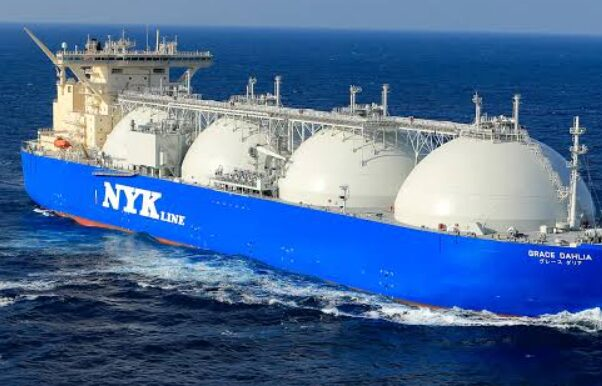
Golar LNG said on 7 October that it had agreed to acquire the 2013-built LNG carrier Grace Dahlia from NYK Line for conversion into its fourth floating LNG production unit. The work will be carried out at CIMC Raffles’ Yantai yard alongside FLNG Esperanza, with redelivery scheduled for 2029.
Grace Dahlia has LNG storage capacity of 177,427 cubic metres. Golar said this is approximately 20% more than the capacity of FLNG Esperanza, its 3.5 million-tonne-per-year unit now under conversion. In an FLNG operation, where liquefaction runs continuously but LNG carriers lift cargoes in scheduled windows, the additional storage provides a larger inventory buffer and greater flexibility in cargo sizing and offtake scheduling.
Golar signed the engineering, procurement and construction contract for the fourth FLNG with Yantai CIMC Raffles Offshore Limited on 12 August. The 3.5 mtpa unit will be Golar’s second FLNG based on its MKII design. The company estimates the total budget at approximately US$2.45 billion delivered to a prospective operating site. That figure includes previously ordered refrigerant-gas compressors and gas turbines, the donor vessel, yard supervision, spares, crew training, contingencies, initial bunkers, voyage costs to the operating site and commissioning.
The project will repeat the MKII design used for FLNG Esperanza. Golar expects the overlapping construction of two similar units at the same yard to create efficiencies in design reuse, long-lead procurement and project execution. Black & Veatch will provide its licensed PRICO liquefaction technology, detailed engineering and process design, specify and procure topside equipment, and support commissioning of the topsides and liquefaction process.
For CIMC Raffles, the award is a significant repeat order. Golar has committed a second MKII conversion to the yard before the first unit is complete. The value for the yard therefore extends beyond a single large offshore contract: the second project provides an opportunity to turn engineering, procurement and integration experience from the first unit into a more repeatable delivery model.
Securing the donor vessel and yard slot, however, does not mean the fourth FLNG has secured contracted cash flow. Golar said in August that advanced commercial discussions were under way for a long-term charter, but as of 7 October it had not disclosed a final customer, deployment location or executed charter. This distinguishes the fourth FLNG from FLNG Esperanza, which is backed by a 20-year contract in Argentina.
The acquisition agreement completes another part of the asset-execution chain around the fourth FLNG, joining the EPC contract and previously reserved long-lead equipment. It gives Golar a clearer 2029 delivery proposition for prospective customers. The next decisive commercial milestone will be converting one of the opportunities under discussion into a long-term charter and confirming the unit’s operating location.