
LNG Canada Phase 2 Reaches FID, Doubling Capacity to 28 Mtpa
LNG Canada's five partners have sanctioned Phase 2, adding two liquefaction trains and doubling total capacity from 14 mtpa to 28 mtpa, with commercial operations expected in the early 2030s.
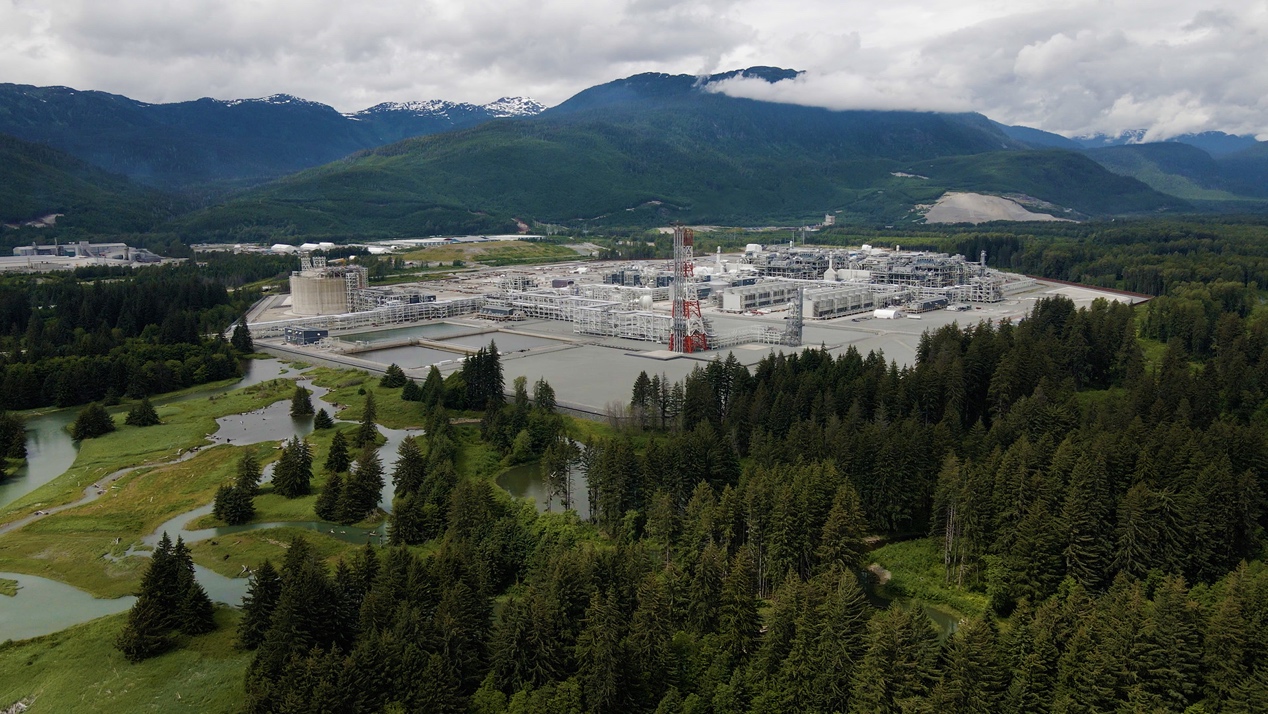
LNG Canada announced on 28 September that its five joint-venture participants — Shell, PETRONAS, PetroChina, Mitsubishi Corporation and KOGAS — have taken a final investment decision on the Phase 2 expansion in Kitimat, British Columbia. Two additional liquefaction trains will lift the facility’s total design capacity from 14 million tonnes per annum to 28 mtpa.
Shell said on 29 September that commercial operations are expected to begin in the early 2030s. In addition to the two new trains, Phase 2 will include another LNG storage tank, a condensate tank, an additional loading berth and expanded utility and process systems. The original site and engineering concept allowed for an eventual four-train development, enabling the expansion to use the existing plant footprint, marine facilities and supporting infrastructure.
Feed-gas infrastructure will be expanded in parallel. Under commercial agreements with Coastal GasLink, LNG Canada will act as execution manager for construction of five compressor stations along the existing 670-kilometre pipeline. Coastal GasLink will remain the owner, operator and permit holder for the pipeline and its future facilities.
The project will continue to use an equity-lifting model: each participant supplies its proportionate share of gas and independently lifts and markets the corresponding LNG output. Shell owns 40% and expects to receive nearly 6 mtpa of additional LNG from Phase 2. PETRONAS holds 25%, PetroChina and Mitsubishi Corporation each hold 15%, and KOGAS owns 5%. PetroChina’s interest therefore corresponds to about 2.1 mtpa of the expansion’s nameplate capacity.
Early engineering work began before FID. In June, the JGC-Fluor JFJV2 joint venture received a limited notice to proceed covering early planning and selected activities intended to improve project certainty. The same partners delivered Phase 1 engineering, procurement, fabrication management, construction management and commissioning, including the first two trains and associated storage, rail, water-treatment, flare and marine systems. Public disclosures have not yet confirmed the award of a full Phase 2 EPC contract.
FID also enables an Indigenous investment option announced in July. MNT Investments LP, representing the economic-development organisations of five neighbouring First Nations, may invest up to CAD1 billion for a majority interest in a special-purpose entity that will acquire the new LNG storage tank and lease it back to LNG Canada. The company expects up to 4,000 construction jobs in Kitimat at peak, with about 2,100 additional jobs associated with the pipeline compressor stations.
Phase 2 will establish a 28-mtpa LNG export hub on Canada’s Pacific coast, providing a shorter shipping route to Northeast Asia than projects on the US Gulf Coast. Future procurement opportunities will extend beyond liquefaction modules to storage, compression, utilities, marine works and heavy module logistics, although package scopes and contracting arrangements remain subject to further disclosure by the owner and its contractors.