
Rovuma LNG Moves Forward as Four-Company Consortium Enters Pre-FID Engineering Phase
The SMDC consortium of McDermott, Saipem, Daewoo E&C and China Petroleum Engineering & Construction Corporation has received a letter of intent for Rovuma LNG Phase 1, taking the project from FEED into limited engineering and procurement work ahead of FID.
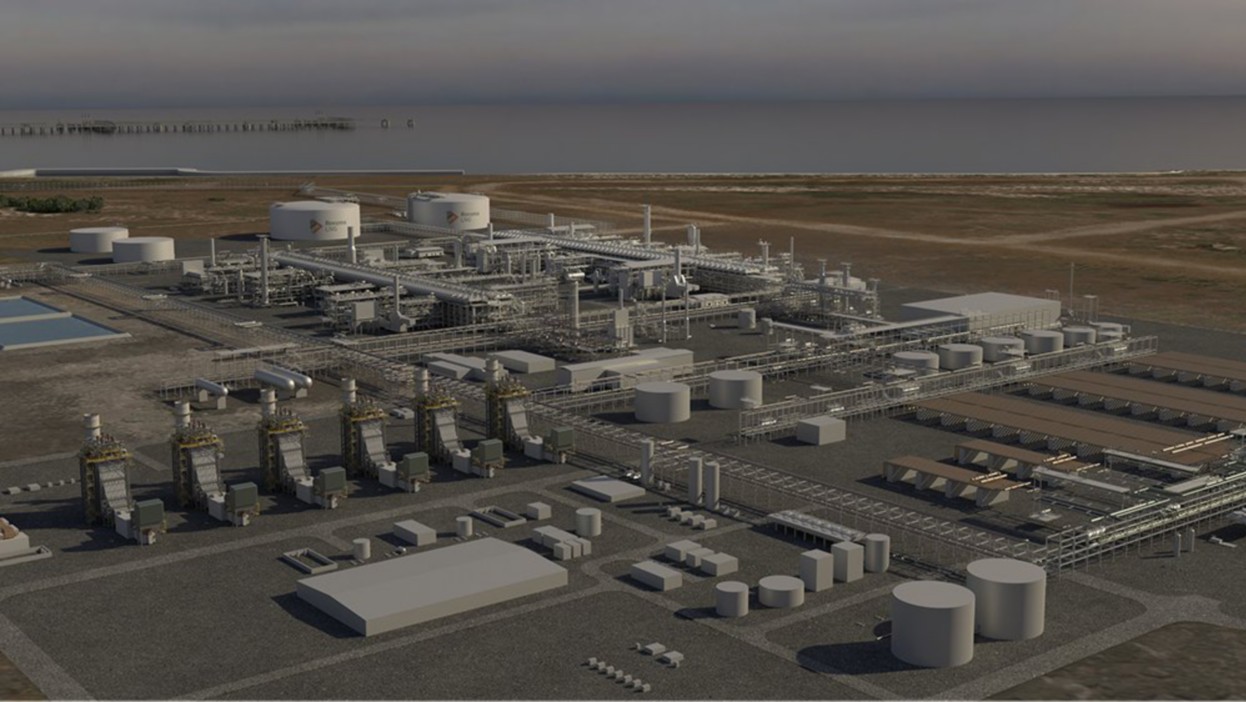
McDermott said on 6 August that its UK subsidiary, acting on behalf of the SMDC consortium, had received a letter of intent from ExxonMobil Moçambique for Rovuma LNG Phase 1. McDermott is the majority partner in the consortium, which also includes Saipem, South Korea’s Daewoo Engineering & Construction and China Petroleum Engineering & Construction Corporation (CPECC).
The letter covers a limited scope of engineering and procurement services for the project’s midstream facilities. The work is intended to refine the design and execution plan ahead of a final investment decision. The Area 4 partners continue to target FID in 2026.
This is not the full EPC award. The main EPC contract, major equipment orders, module fabrication locations and site execution plan remain subject to FID and subsequent contract awards.
A Four-Company Consortium Moves into the Next Phase
The current FEED programme began in 2024. In September that year, McDermott, Saipem and CPECC were selected to develop the modular design for the onshore LNG plant on the Afungi peninsula, including gas pre-treatment, utilities and offsites, and to prepare the basis for the later EPC phase.
Daewoo E&C has now joined the contractor team for the pre-FID engineering phase. McDermott said FEED had been completed and that the new letter of intent would carry the project from front-end design into detailed preparation for execution.
Engineering for inside-battery-limits facilities, including the liquefaction modules, is expected to be performed from McDermott’s offices in London and Gurugram, India. Some project management personnel will join the consortium team in Milan. The announcement did not disclose the next-phase work split among Saipem, Daewoo E&C and CPECC, or the value of the award.
CPECC’s continuation from FEED into the limited engineering and procurement scope keeps a Chinese contractor within the project’s core delivery team. Its eventual share of engineering, procurement and fabrication cannot be determined until the full EPC arrangements are awarded.
The Same Area 4 Resource Base, but a Different Development Route
Rovuma LNG, Coral South and Coral North all form part of Area 4 in Mozambique’s Rovuma Basin. Coral South and Coral North develop the Coral field through floating LNG facilities that process, liquefy, store and export gas offshore. Coral South is already operating, while Coral North has entered execution; both are led by Eni.
Rovuma LNG is designed primarily around the Mamba field complex. Offshore gas will be transported by pipeline to the Afungi peninsula in northern Mozambique for treatment and liquefaction at an onshore plant led by ExxonMobil.
Area 4 therefore has two distinct development routes: FLNG for the Coral projects and an offshore-gas-to-onshore-LNG scheme for Rovuma LNG. They share some resource partners but remain separate projects with different operators, facilities and engineering systems.
Chinese participation also operates at two levels. CNPC indirectly holds about 20% of Area 4 through the project ownership structure, while its engineering subsidiary CPECC is part of the onshore LNG contractor team. Chinese companies are therefore involved both as resource partners and in engineering preparation for the LNG plant.
Capacity Raised to 18.6 Million Tonnes per Year
Rovuma LNG Phase 1 was originally planned with two large liquefaction trains and design capacity of about 15.2 million tonnes per year. In 2021, the partners revised the concept in response to market conditions, security concerns and execution requirements, moving to a modular, electrically driven design.
The current scheme comprises 12 modular liquefaction units with total capacity of 18.6 million tonnes per year and a targeted start-up in 2031. ExxonMobil says the modular e-drive concept should improve execution certainty and operating reliability while reducing greenhouse-gas emissions.
The project has been under development for years and has passed through design changes, security disruption and delays to investment approval. FEED restarted in 2024, and the new letter of intent reconnects that work with engineering and procurement preparation ahead of FID.
At 18.6 million tonnes per year, Rovuma LNG would rank among the largest new LNG developments expected this decade and would be ExxonMobil’s largest planned single investment. Whether FID is achieved in 2026 will determine when full EPC, major equipment and module fabrication awards can begin.