
How Will the U.S. Midterms Affect LNG Carrier and Offshore Orders?
Democratic control of Congress will not rewrite existing backlog. The greater exposure lies with LNG, offshore oil and gas, and offshore wind projects that have not reached FID, permits or long-term contracts.
Democrats have won control of both chambers of Congress in the U.S. midterm elections and will take charge when the new Congress convenes in January 2027. The Trump administration, however, will continue to control the federal agencies responsible for energy and offshore approvals. For shipyards and offshore contractors, this divided government will not rewrite contracts that have already been signed, so the immediate effect on existing backlog should be limited.
The greater exposure lies with projects that have not reached final investment decision, secured key permits or obtained long-term commercial commitments. Over the next two years, the policy divide is most likely to reach the equipment market through three channels: the schedule for proposed LNG export terminals, the pace of offshore oil and gas leasing and development, and the ability of U.S. offshore wind to rebuild a continuous project pipeline.
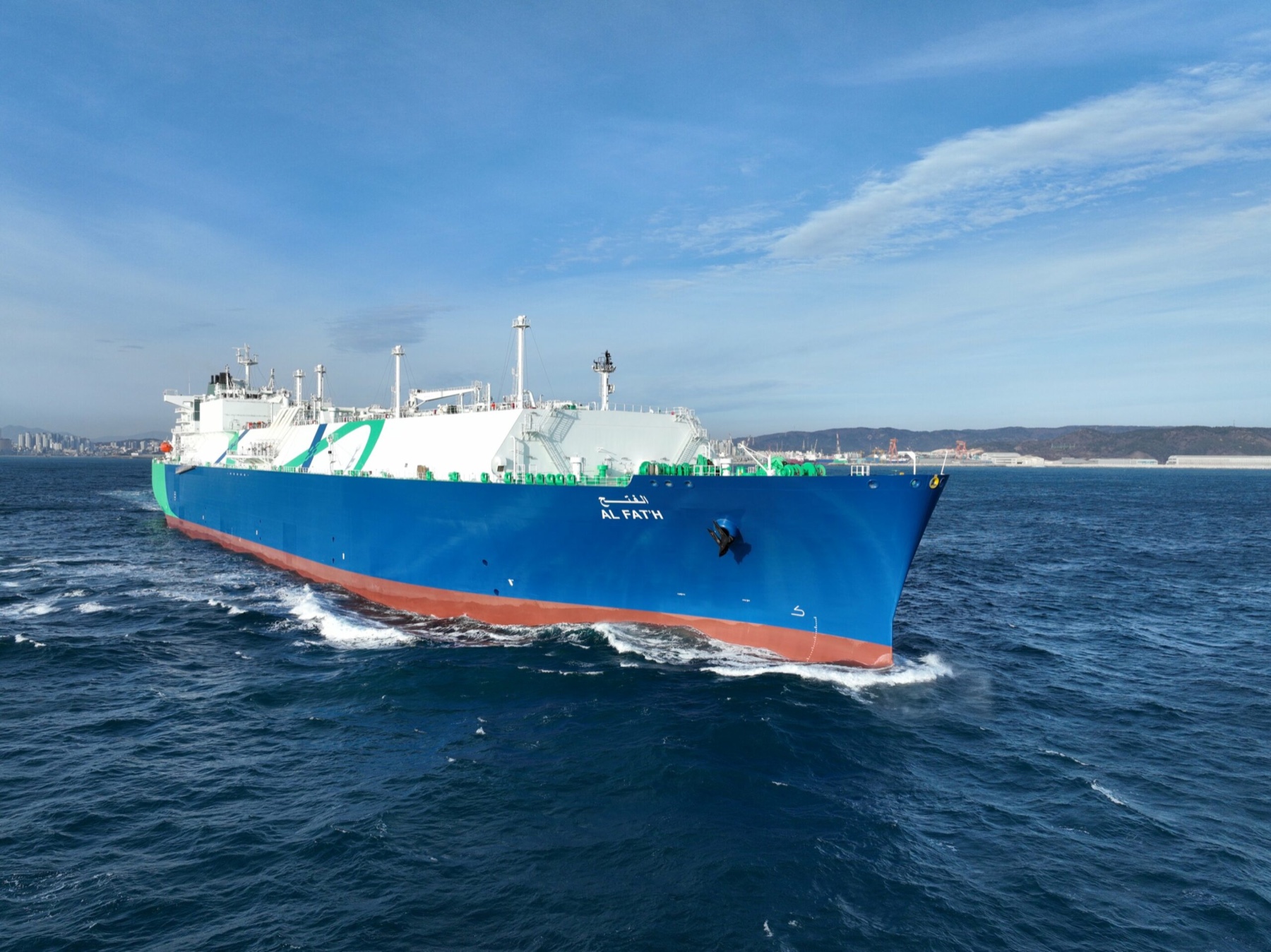
Cover image: the LNG carrier Al Fat’h, built by HD Hyundai Heavy Industries at its Ulsan yard. Image: Knutsen Group.
Could U.S. LNG policy delay the next wave of LNG carrier orders?
In 2024, the Biden administration paused reviews of a group of LNG export applications for non-free-trade-agreement countries. On his first day back in office, President Trump directed the Department of Energy to resume those reviews. Approval authority remains with the executive branch. The new Congress can hold hearings, investigate administrative decisions, influence budgets and pursue legislation, but it cannot replace the Department of Energy as the issuer of export authorisations.
U.S. LNG policy will therefore not reverse automatically when control of Congress changes. Democratic majorities can increase oversight and political pressure, but legislation that changes the current framework would still require the president’s signature. Under a Trump administration, friction is more likely to appear through budget disputes, investigations and litigation than through an immediate halt to every project.
The effect on LNG shipping is equally indirect. Vessels already backed by long-term charters and placed in shipyard production schedules are unlikely to be cancelled because of one election result. The more exposed segment is the next round of orders. If an export terminal is delayed at the permitting, financing or FID stage, its associated long-term shipping arrangements and newbuild contracts may also move to the right.
High vessel prices amplify that timing risk. Flex LNG said in August that an LNG carrier with a 2029 delivery slot at a Korean yard was priced at about US$250 million, with Chinese yards roughly US$20 million lower. Owners are more likely to commit that level of capital when long-term cargo, charter and financing arrangements are reasonably clear. The pace of new terminal development therefore matters more to the next ordering cycle than the congressional seat count on its own.
Will offshore oil and gas policy reduce drilling and equipment orders?
The Biden administration’s 2024–2029 offshore leasing programme provided for only three potential Gulf of Mexico lease sales. Federal legislation advanced under the Trump administration subsequently requires 30 Gulf sales between 2025 and 2040, generally two a year from 2026 through 2039.
A Democratic Congress can introduce legislation to amend or repeal that schedule, but President Trump can veto it, and overriding a veto requires a two-thirds majority. The statutory sales programme is therefore unlikely to disappear quickly as a direct consequence of the midterms.
A lease sale, however, is not a drilling campaign, and it is not an order for a rig, floating production system or subsea package. Operators must still complete geological evaluation, exploration, resource confirmation, development planning and FID before contractors receive drilling, engineering, construction and installation work. Operator capital expenditure and project economics—not the number of lease sales alone—ultimately determine offshore orders.
The more likely outcome over the next two years is an open upstream policy combined with selective project execution. High-quality acreage and commercially robust developments can continue, while marginal projects may slip because of oil prices, costs or financing. Rig owners and equipment suppliers should watch operator tenders, FIDs and multi-year contract awards more closely than congressional votes.
Will stronger support for offshore wind create more vessel work?
By September 2024, the Biden administration had approved ten commercial-scale offshore wind projects. Project momentum tightened sharply after the Trump administration took office. In March 2026, TotalEnergies agreed to relinquish the Carolina Long Bay and New York Bight leases and invest an amount equal to the refunded lease fees in U.S. gas and power activities. Democratic senators later opened an investigation into these and other lease terminations.
Democratic control of Congress can bring stronger oversight and budget support for offshore wind, but Congress cannot restart an individual development by itself. Developers still need federal permits, state offtake arrangements, grid access and workable financing, supply-chain and installation plans. Only when those pieces align does policy support become an executable contract for a vessel owner or offshore contractor.
Existing high-specification installation vessels are likely to benefit before newbuilds. Cadeler’s Wind Pace, built at COSCO’s Qidong yard, had secured a U.S. contract before delivery and performed its first U.S. campaign from the second quarter of 2025 through the first quarter of 2026. The case shows that developers first secure vessels that are delivered or close to delivery and can satisfy U.S. regulatory and construction requirements. New orders are more likely only when several projects advance together and sustained demand tightens the available fleet.
What this means for shipyards and offshore contractors
The midterm result changes the probability and timing of future projects; it does not transform the existing orderbook overnight. LNG carrier demand depends on export terminals reaching permits and FID. Offshore oil and gas equipment depends on operator capital spending, drilling plans and development contracts. Offshore wind installation demand depends on projects securing permits, offtake and financing.
Signed LNG carrier and offshore contracts are unlikely to face systematic cancellation simply because Congress has changed hands. The larger uncertainty sits with projects not yet ordered for 2027 and beyond: LNG and offshore oil and gas decisions could be delayed by political conflict, while offshore wind may receive more support. Whether any of that becomes a new vessel order will still depend on a bankable, continuous workload.