
Where Do the Profits From a Multibillion-Dollar FPSO Go?
A large FPSO can be worth billions of dollars, yet profit does not permanently reside with shipyards, equipment suppliers, offshore installers or operators. The movement of bottlenecks and bargaining power determines who ultimately retains contractual value as earnings.
There is no permanently high-margin segment in the FPSO value chain. In 2025, Seatrium lifted its gross margin from 3.1% to 7.4%; Saipem’s Asset Based Services reported a 14.4% EBITDA margin; Baker Hughes’ Industrial & Energy Technology (IET) segment reported 18.5%; and MODEC’s operating margin was about 9.6%, with return on equity at 27.4%. These figures are not directly comparable: shipyards, offshore installation contractors, equipment-and-service providers and FPSO operators run fundamentally different businesses. The more useful question is why margins improve within a company, and what enables each business model to retain value. Viewed alongside changes in supply and demand, a clear pattern emerges: profit in the FPSO value chain does not stay in one place. It moves with bottlenecks and bargaining power.
Where the bottleneck sits, bargaining power may follow
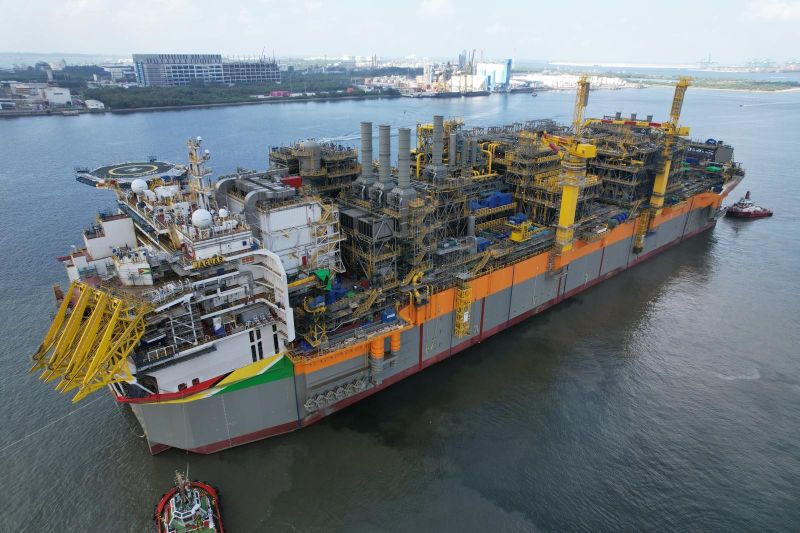
In its 2025 global floating-production industry survey, Energy Maritime Associates identified shipyards as the largest potential bottleneck for the following one to two years. Module-fabrication capacity ranked second, while offshore installation also featured prominently. Merchant-vessel orders had absorbed berth capacity, while the number of sites able to handle large FPSOs and very large topsides remained limited. Shipyard capacity, once treated as an ordinary construction input, had become a material determinant of project schedules.
By 2026, the picture had already shifted. Delays to some large projects during 2024–25 freed capacity across the supply chain, easing cost pressure and congestion. Bottlenecks can move within a year.
That means shipyards, critical equipment suppliers, offshore installers and even project-management capability can gain stronger bargaining power when they are the scarcest and least substitutable part of the system. But scarcity alone is not profit. It has to be translated into pricing, payment terms and risk allocation before it can become margin during execution.
Seatrium’s recent performance illustrates the point. Its 2025 revenue rose 24%, while gross margin increased from 3.1% to 7.4%. The company attributed the improvement to a better project mix, higher yard utilisation, productivity gains and the cost advantages of Series Build projects. That is more instructive than simply saying that shipyard margins are low. Even within the same large-FPSO construction market, profitability changes when utilisation, repeatability and contract terms change.
Scarce assets can command higher rates—and consume capital
Saipem illustrates another model. Its Asset Based Services business, which includes Offshore E&C activities such as SURF and offshore wind, generated €9.044 billion of revenue and €1.299 billion of EBITDA in 2025, for a 14.4% EBITDA margin.
Large pipelay vessels, heavy-lift vessels and deepwater construction assets are limited in number. When several projects compete for the same fleet and installation windows, the assets themselves create bargaining power. But that scarcity is not free: specialised construction vessels require substantial investment and carry depreciation, maintenance and idle-time risk.
Saipem’s higher EBITDA margin should therefore not be read simply as proof that offshore installation is more profitable than shipbuilding. It reflects a different commercial model—using capital-intensive, scarce execution capability to earn higher rates while carrying the associated cost of capital.
This is why margins alone can mislead. To earn the same RMB100 million of profit, one company may principally need engineering teams; another may first have to commit several billions of yuan, or more, to construction assets.
For equipment suppliers, one order can become many
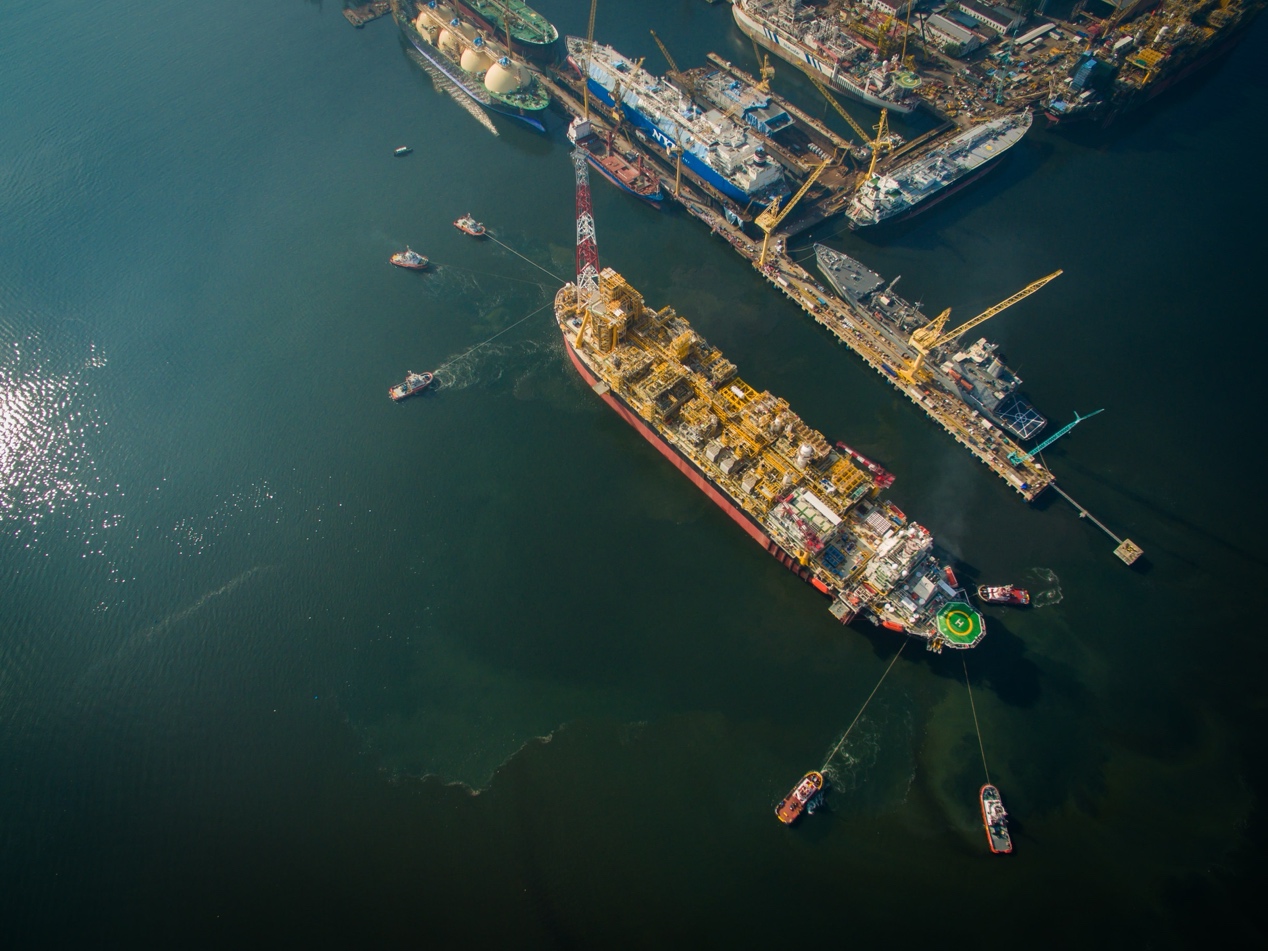
Baker Hughes’ IET segment generated $13.409 billion in revenue and $2.482 billion in EBITDA in 2025, for an 18.5% EBITDA margin. Its Gas Technology revenue structure is particularly revealing: at year-end 2025, remaining performance obligations in Gas Technology Services stood at $16.1 billion, above the $11.6 billion recorded for Gas Technology Equipment. At a minimum, this shows how a substantial long-term order base can continue to accumulate after the original equipment has been delivered.
Once gas turbines, compressors and other critical equipment enter FPSO service, they require spares, overhauls, upgrades and technical support. A larger installed base supports a larger aftermarket. When critical equipment also has a long lead time, it adds another layer of value: it can affect not only equipment performance, but also when an entire project can start up.
Equipment suppliers do not achieve a stronger earnings structure simply because their products are “technologically advanced.” Technical barriers, constrained supply and long-term service reinforce one another. The ability to keep earning after the original equipment order has closed is a major distinction from one-off engineering work.
MODEC earns by organising the bottlenecks
MODEC represents another model. In 2025, its operating margin was about 9.6% and return on equity reached 27.4%. That margin may not look exceptional in isolation. Yet MODEC is not paid for a single link in the chain. It undertakes EPCI and overall project coordination, provides long-term operations and maintenance, typically retains an interest in project companies under long-term lease arrangements, and brings in partners and project finance.
The central challenge is how to assemble shipyard capacity, modules, critical equipment, offshore construction resources and financing when all are constrained at once—and still bring an FPSO into service on schedule and operate it over the long term. That is also a form of scarcity, although it is harder to quantify than a single piece of equipment or an available berth.
In earlier discussions about pressure on SBM and MODEC from both upstream and downstream, we noted that oil companies can strengthen project management and shipyards can pursue a larger EPC role. An FPSO specialist’s value does diminish if it becomes only an intermediary coordinator. But if it locks in critical resources earlier, manages interfaces and schedule more effectively, and reliably delivers a multibillion-dollar project, that systems-integration capability itself can create bargaining power.
Today’s reported profit was often negotiated years ago
FPSOs have another easily overlooked feature: their cycle is long. A large EPCI contract commonly takes years to execute. The profit visible in a company’s accounts today therefore reflects, to a significant extent, the supply-demand balance, pricing and risk allocation negotiated when the contract was signed years earlier.
That is why a shipyard bottleneck today will not immediately be reflected in today’s margin. Better prices and contractual terms secured in a tight-capacity market enter the income statement only gradually as projects are executed. The income statement records the outcome; bargaining power is exercised when the contract is signed.
Seen this way, the concern around shipyards as a principal industry bottleneck in 2025, followed by some easing of supply-chain pressure as projects slipped in 2026, is worth watching. Bottlenecks move, bargaining power changes with them, and the effect on reported profit arrives with a lag.
From bottleneck to profit, at least four things must happen: scarcity emerges; bargaining power is gained; that bargaining power is written into the contract; and execution preserves the contracted margin. The gap between “a hot industry” and “a profitable company” lies in those steps.
This also connects to our earlier discussion of Chinese shipyards turning EPC orders into EPC capability. The bargaining power created by a tight market for high-quality berths may fade with the cycle. But if this round of projects helps build repeatable construction, supply-chain management, cost control and project-management capability, those capabilities can endure even after berth availability improves.
Scarcity created by the market is temporary. Turning it into capability that others struggle to replace is how a company may retain the profit from a cycle.