
ExxonMobil Advances Guyana's Ninth FPSO, Considers Reusing Longtail Engineering
ExxonMobil is assessing a ninth deepwater development centred on the Haimara gas field and is considering applying design and engineering work already completed for Longtail to the next project.
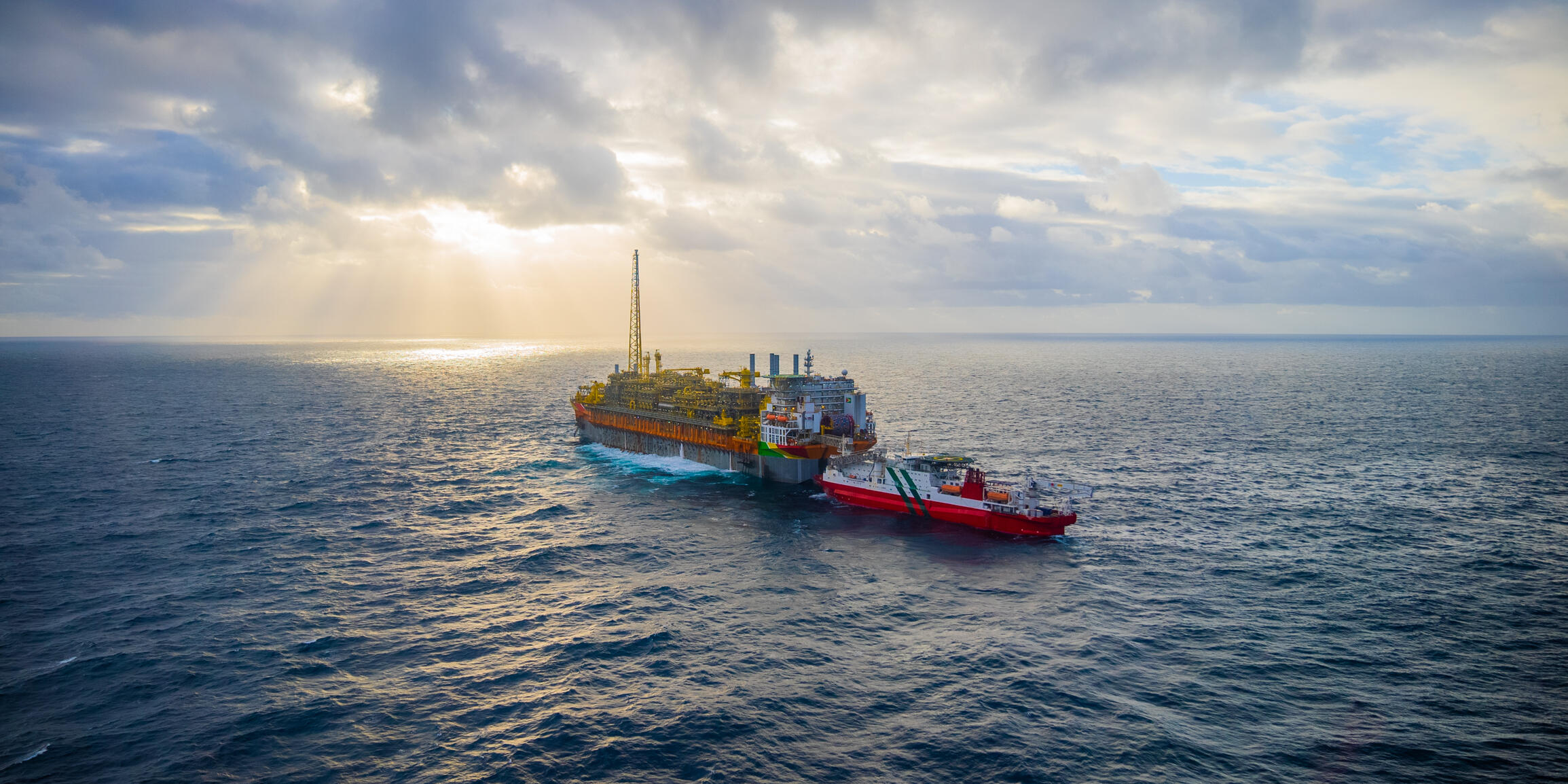
ExxonMobil chairman and chief executive Darren Woods said during the company’s second-quarter earnings call on 31 July that the group was evaluating Guyana’s ninth FPSO and hoped to apply work completed for Longtail to the next development, creating a material capital-cost advantage.
The concept has not been finalised. The ninth development, centred on Haimara, entered Guyana’s environmental approval process in May.
Haimara Targets First Production in 2031
Project documents submitted to Guyana’s Environmental Protection Agency show Haimara developing the Haimara, Bluefin and Hatchetfish gas fields, with scope to incorporate other nearby resources. The project lies in the southeast of the Stabroek Block, about 222 kilometres from Georgetown, in water depths of 1,200 to 1,700 metres. The preliminary plan includes 24 to 60 production and gas-injection wells.
Haimara would use a newbuild FPSO approximately 334 metres long, 60 metres wide and 32.8 metres deep. Gas-processing capacity is estimated at one to 1.5 billion standard cubic feet per day, with condensate separation of 160,000 to 220,000 barrels per day and storage for about two million barrels. Start-up is targeted for 2031 and the facility would operate for at least 30 years.
Unlike Guyana’s earlier oil-led developments, Haimara is a retrograde gas-condensate reservoir. Condensate would be separated, stored and exported by shuttle tanker. Most remaining gas would be treated, compressed and reinjected to maintain reservoir pressure and improve condensate recovery, with potential future exports as downstream markets develop.
The FPSO therefore requires large gas-processing, dehydration, compression and reinjection systems. At peak production, the preliminary plan indicates a condensate cargo could be exported every three to five days.
Longtail Is Already in FEED
Longtail is the proposed eighth development in the Stabroek Block and is likewise focused on gas and condensate. SBM Offshore received the FPSO FEED contract in March 2026 and allocated its ninth newbuild Fast4Ward multipurpose hull to the project.
The facility would use standardised topsides modules, process 1.2 billion standard cubic feet of gas per day, produce about 250,000 barrels of condensate per day and store two million barrels in water depths of about 1,750 metres. Longtail still requires government approval and FID and is targeted for start-up in 2030.
If sanctioned, SBM Offshore would proceed with FPSO construction and installation and later participate in operations and maintenance.
Reusing Engineering Does Not Mean Producing an Identical FPSO
Longtail and Haimara are both high-gas-throughput FPSOs. They have the same condensate storage capacity, similar gas-processing scale, and production concepts based on condensate separation and gas reinjection. Those similarities create scope to reuse Longtail design and engineering work.
ExxonMobil has not disclosed which elements could be carried over or how Haimara’s FPSO would be contracted. Reuse is better understood as applying development and engineering work from Longtail, not as confirmation that the hull, topsides and equipment configuration will be identical.
Longtail is progressing towards FID, while Haimara remains in environmental review and preliminary design. The final FPSO concept, possible use of another Fast4Ward hull and the eventual contractor arrangement await further project decisions.