
CNPC Offshore Engineering Sets Up Tianjin Subsidiary for Platform Leasing
CNPC Offshore Engineering has established a RMB326 million subsidiary in Tianjin to support the leasing, procurement and operation of multiple offshore platforms.
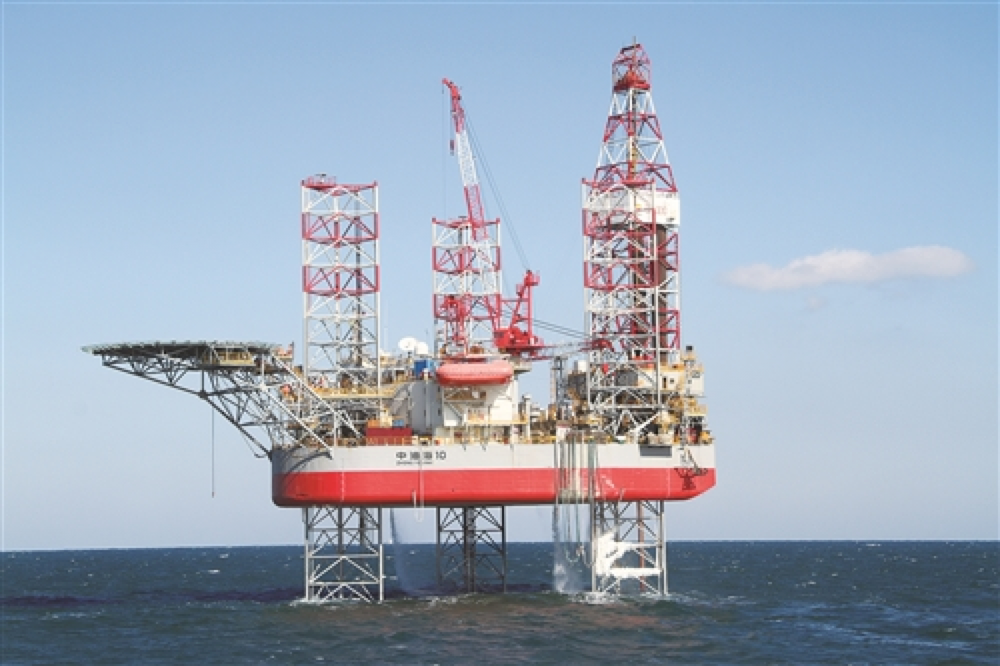
China National Petroleum Corporation’s offshore engineering arm has established a wholly owned subsidiary in Tianjin to support the leasing, procurement and operation of multiple offshore platforms.
Tianjin Dongjiang Comprehensive Bonded Zone said on 16 September that it had issued the business licence for DeepBlue International Energy (Tianjin) Co., Ltd., a wholly owned subsidiary of CNPC Offshore Engineering Co., Ltd. The new company has registered capital of RMB326 million and is expected to undertake offshore-platform leasing and procurement as well as supporting operations for offshore energy development.
The explicit reference to multiple offshore platforms suggests that CNPC Offshore Engineering is creating a dedicated vehicle for future equipment acquisition and asset operation. Offshore units are capital-intensive and work on long project cycles. A leasing platform can align equipment commitments more closely with contract duration and cash flow: operators avoid purchasing a unit outright for each project, while the asset owner can centralise procurement, financing, leasing, modification, redeployment and eventual disposal. Once one contract ends, a platform can be re-chartered, upgraded or moved to another region instead of remaining idle.
Dongjiang provides an established leasing base
Dongjiang already has an ecosystem suited to this model. By September 2026, more than 1,300 leased vessels with an aggregate asset value above US$40 billion had been registered there. The total included 84 offshore platforms representing more than US$11.7 billion of offshore leasing assets. The zone has developed structures for offshore leasing, export leasing and bonded leasing, alongside services covering investment, operation, maintenance and asset disposal.
For offshore contractors serving both Chinese and overseas markets, this provides a comparatively mature environment in which platforms can be acquired, held, leased and transferred. A precedent is Tianjin Guohai Offshore Engineering Investment Co., established in Dongjiang in 2019 to consolidate, lease and dispose of offshore assets held by Chinese state-owned enterprises. Public information as of October 2024 showed its managed fleet comprised 14 Guo-series jack-ups and six Tai-series semisubmersibles and drillships deployed across China, Saudi Arabia, Indonesia and Malaysia.
The redeployment of the Guoxin platform illustrates the operational value of this approach. The unit was bareboat-chartered to an offshore wind contractor in 2021 and modified for wind installation work. When that market weakened in 2023 and demand for oil and gas jack-ups recovered, the owner coordinated termination of the existing charter, restoration and commissioning of the drilling system, and the next charter. The drilling capability was reinstated and the unit redelivered within 100 days. The platform’s value came from continued utilisation and rapid reconfiguration, not simply from ownership.
Linking offshore operations with asset management
DeepBlue will also sit behind an established operating base. CNPC Offshore Engineering owns mobile platforms, modular rigs, engineering vessels, fabrication facilities and supply bases. Its activities cover offshore drilling and completion, cementing, testing, well services and offshore engineering design and construction. CNPC’s 2023 annual report said the company spudded 148 wells, completed 134 wells and drilled 422,000 metres during the year, while renewing a three-year platform-services agreement with CNOOC.
DeepBlue’s registered business scope also includes power generation, transmission and distribution, leaving room to support offshore wind and other energy projects. CNPC Offshore Engineering had delivered 15 offshore wind and solar platforms by September 2025 and in 2026 secured EPC work for CNOOC’s CZ7 offshore substation and the offshore substation for Area B of the Xiapu offshore wind project in Ningde. Given DeepBlue’s stated role, it could support the acquisition, leasing or operation of assets such as offshore substations and wind installation or maintenance platforms. Any direct investment in, or operation of, wind farms would still depend on project approvals and applicable power-sector licences.
CNPC Offshore Engineering has also demonstrated that idle equipment can be returned to revenue service. The Zhongyouhai 18 and Zhongyouhai 19 units entered external charter service in 2019 after repair, inspection and assessment, while Zhongyouhai 20 and Zhongyouhai 21 subsequently underwent completion and upgrading. By the end of September 2024, the four platforms had spudded 113 wells, completed 85 wells and drilled 254,000 metres, generating more than RMB400 million in revenue. Fourteen CNPC Offshore Engineering platforms were in production by February 2025, and the company later started an Indonesian jack-up campaign that was then its largest international offshore drilling-services project.
Deployment efficiency will determine value
The creation of DeepBlue can therefore be read as advance preparation for future platform demand and asset management. That does not mean all offshore units will appreciate. The opportunity is concentrated in equipment with reliable operating performance, upgrade potential and the ability to move between regions and contracts.
COSL’s 2026 interim report points to the same market split. Demand for deepwater semisubmersibles continued to expand while jack-up demand in mature shallow-water basins remained comparatively steady. COSL reported overall rig utilisation of 93.7% of available days and an 8.8% year-on-year increase in average daily revenue. Semisubmersible operating days rose 11.4%, while jack-up operating days fell 5.2%.
The next stage of competition is therefore not simply about owning platforms. It is about placing each unit with the right customer, in the right basin and under the right contract while controlling modification, maintenance, downtime and redeployment costs. CNPC Offshore Engineering brings operating and technical capabilities; Dongjiang brings leasing structures and lifecycle asset services. DeepBlue is intended to connect the two, giving the group a more flexible vehicle when it needs to add, replace or redeploy offshore units.