
Dajin Plans Two 8,000-tonne Offshore Wind Foundation Installation Vessels
Dajin has selected Ulstein's HX122 with U-STERN design and said it plans to build two offshore foundation installation vessels with 8,000-tonne main cranes.
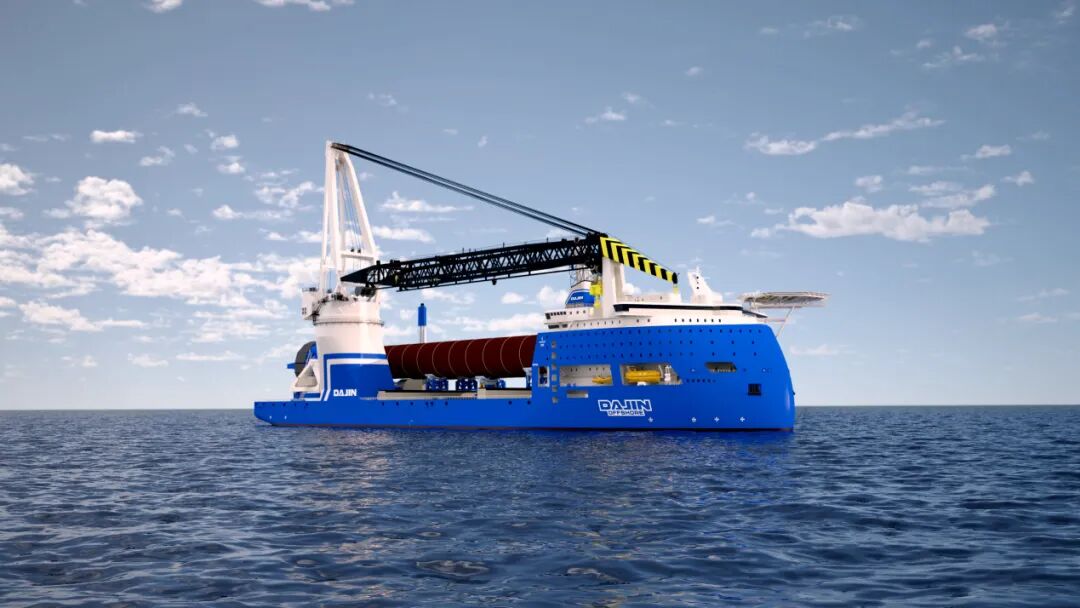
Dajin Heavy Industry has signed a design contract with Norwegian ship designer Ulstein to develop the ULSTEIN HX122 with U-STERN® offshore wind foundation installation vessel. Dajin said it plans to build two vessels of the design as it moves beyond foundation manufacturing and transport into offshore installation.
The agreement was signed on 22 September during WindEnergy Hamburg 2026. According to Dajin, the next-generation vessel is intended for deepwater and far-shore wind projects and will feature a main crane rated at up to 8,000 tonnes. It is designed to handle monopiles up to 16 metres in diameter and 4,600 tonnes in weight, supporting foundation installation for offshore turbines in the 15 MW to 30 MW range.
U-STERN targets the critical monopile handling phase
The design incorporates Ulstein’s U-STERN® arrangement, creating a sheltered stern area for monopile launch and installation. Dajin said the configuration can reduce wave loads by 75% and vessel motions by 25% compared with conventional operating methods, with the aim of reducing risk during monopile launch and upending and widening the workable weather window.
Ulstein said the HX122 combines U-STERN with its X-BOW® hull form. Monopiles can be stored longitudinally and upended along the vessel centreline at the stern, while the vessel remains headed into the prevailing sea during installation. The concept also combines a large working deck, dynamic positioning and heavy-lift capability for installing monopiles, jacket foundations and offshore substations.
The vessel is also intended for offshore oil and gas construction and decommissioning work, giving it a broader range of potential assignments across market cycles. Ulstein and European offshore equipment suppliers will continue developing the design before it advances to the construction phase.
Extending from fabrication into offshore installation
Dajin’s core business already covers large offshore wind foundations. The company is also expanding its specialist transport fleet and developing overseas marshalling-port capabilities. The new design contract is therefore a preparatory step towards entering offshore construction rather than simply adding another transport asset.
If both vessels are built and placed into service as planned, Dajin could extend its value chain from foundation manufacturing and transport into port handling and offshore installation. For developers, an integrated model of this kind could reduce the number of interfaces between the fabricator, transport provider and installation contractor.
The disclosed award is a design contract, however. It does not yet mean that construction contracts for two vessels have been signed or that building has started. Dajin’s eventual delivery capability will depend on design maturity, newbuild execution, vessel commissioning and performance on subsequent projects.
As offshore turbines become larger and developments move farther from shore, vessels capable of handling increasingly large and heavy monopiles are becoming a critical part of the supply chain. Dajin’s move is both a vertical extension of its existing foundation business and another sign that Chinese offshore wind equipment manufacturers are seeking to evolve from product suppliers into integrated project-delivery companies.