
From the North Field to QatarEnergy's 128-Vessel Programme: What Middle East Oil and Gas Investment Means for Chinese Companies
From Qatar's North Field and mature-field redevelopment to LNG carriers, project equity and long-term operations, Middle Eastern investment is drawing Chinese companies into a broader value chain.
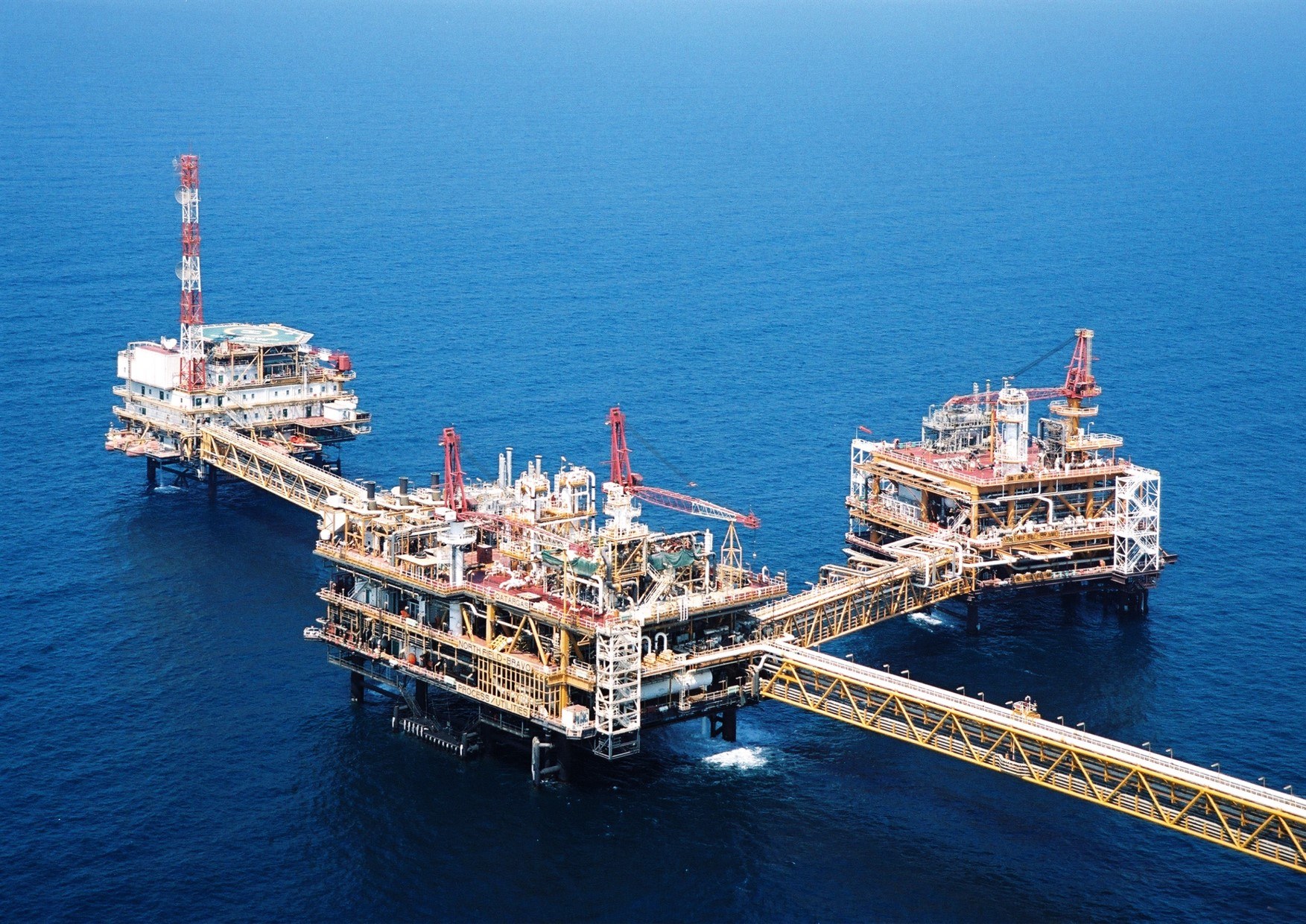
China Offshore Oil Engineering Company (COOEC) recently received notification of award for the MM EPIC2 package on Qatar’s Maydan Mahzam field. Following RUYA, Bul Hanine and the North Field Production Sustainability programme, it is another large offshore package secured by COOEC in Qatar. The company’s newly signed orders in the Middle East have exceeded RMB50 billion over the past three years.
On 9 June 2026, Hudong-Zhonghua held the steel-cutting ceremony for a 271,000-cubic-metre QC-Max LNG carrier, moving the vessel class from the orderbook into physical construction.
One is an offshore oil and gas project and the other an LNG carrier. Both stem from investment across the supply chain created by Middle Eastern oil and gas expansion.
Qatar plans to raise its annual LNG production capacity from 77 million tonnes to 142 million tonnes. ADNOC has approved US$150 billion of capital expenditure for 2026-2030 and plans to award around US$55 billion of project contracts during 2026-2028. Saudi Aramco’s 2026 capital investment guidance is US$50-55 billion.
Chinese participation is also broader than it once was. Beyond platform and module fabrication, it now includes upstream equity, offshore EPCI, artificial islands and pipelines, chemical plants, LNG carrier construction and long-term vessel operation.
Qatar’s LNG expansion is driving offshore and shipbuilding orders
The North Field is at the centre of Qatar’s current investment cycle. Under QatarEnergy’s plan, North Field East will lift annual LNG capacity from 77 million tonnes to 110 million tonnes. North Field South will raise it further to 126 million tonnes, while North Field West is intended to take capacity to 142 million tonnes by the end of 2030.
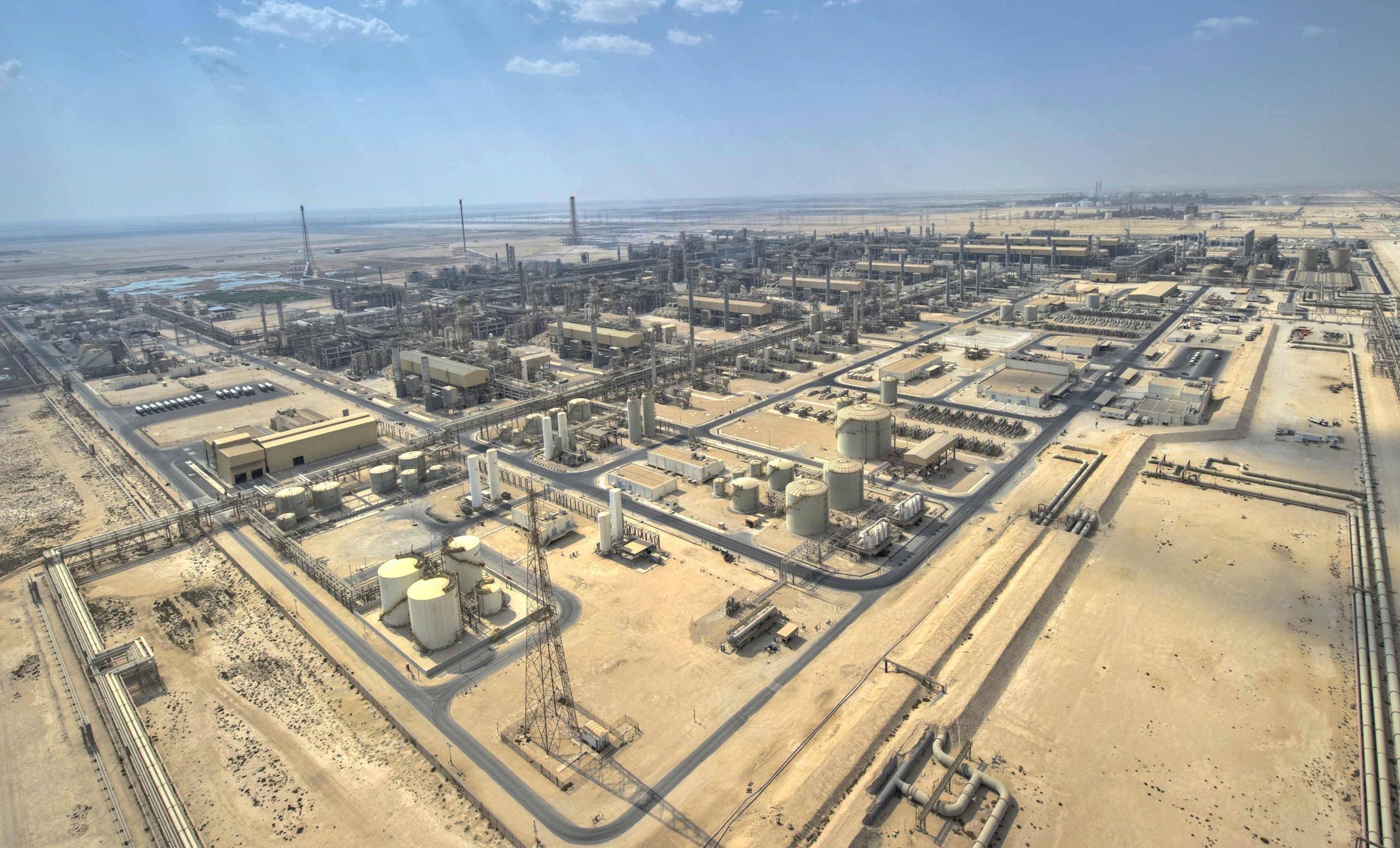
The additional capacity will ultimately appear in liquefaction trains at Ras Laffan, but the gas must first be produced offshore, compressed and transported ashore. This has created several large packages under the North Field Production Sustainability programme, covering compression platforms, associated facilities, subsea pipelines, cables and other infrastructure.
In September 2024, Saipem won the combined COMP3A and COMP3B contract, worth approximately US$4 billion. The scope includes six platforms, about 100 kilometres of 24-inch and 28-inch corrosion-resistant-alloy rigid subsea pipelines, roughly 100 kilometres of subsea composite cables, 150 kilometres of fibre-optic cables and other subsea facilities.
In December 2025, Saipem and COOEC secured the COMP5 contract. The total award is worth about US$4 billion, of which Saipem disclosed a share of approximately US$3.1 billion. It covers two offshore compression complexes, each consisting of a compression platform, living-quarters platform, flare platform and connecting bridges, with a total weight of around 68,000 tonnes per complex. Saipem plans to use the De He construction vessel for offshore installation during 2029-2030.
The North Field expansion is therefore generating much more than onshore liquefaction work. Offshore supply, compression, transportation, power and maintenance represent a substantial engineering market of their own.
Mature-field redevelopment is creating offshore EPCI work
Qatar is also redeveloping mature offshore fields including Bul Hanine and Maydan Mahzam.
Bul Hanine was discovered in 1970 and began production in 1972. Its redevelopment is intended to extend field life and raise capacity through new facilities and modifications to existing systems. In 2025, COOEC secured the BH-EPIC1 and BH-EPIC2 packages, with a combined value of about US$4 billion. The contracts became effective that October and are scheduled for completion in June 2031. Fabrication began at COOEC’s Qingdao International High-end Equipment Manufacturing Base on 15 September 2026.
According to COOEC, the BH EPIC scope includes more than 60 individual offshore oil and gas facilities, 40 subsea pipelines and cables, modifications to operating platforms and removal of abandoned platforms. More than 130,000 tonnes of steel will be processed, and COOEC is responsible for engineering, procurement, fabrication, transportation, installation and commissioning.
Maydan Mahzam has also been divided into separate packages. PTSC M&C won EPIC1, covering eight new structures together with modification, connection and commissioning of existing facilities, with execution planned from the fourth quarter of 2026 through the end of 2031. COOEC’s EPIC2 package is centred on subsea pipelines, power cables, umbilicals and associated facilities.
On the Al-Shaheen field, COOEC also received the approximately US$900 million RUYA EPCI09 contract directly from operator North Oil Company. It covers 41 subsea pipelines and nine subsea composite cables, with COOEC responsible for project management, detailed engineering, procurement, construction, transportation, installation and pre-commissioning. The first batch of coated line pipe shipped in 2025 weighed nearly 10,000 tonnes and involved several Chinese companies in production, processing and transportation.
These mature-field projects require more coordination than the fabrication of a standalone platform. Contractors must combine new construction with modifications to live platforms and pipeline networks, shutdown windows, simultaneous offshore operations and removal work. For COOEC, they extend responsibility from fabrication into engineering, procurement, offshore installation and commissioning.
Chinese companies in Qatar are more than contractors
Chinese companies have also entered project investment and LNG trading through the North Field expansion. In 2023, QatarEnergy and Sinopec signed a partnership agreement for North Field East. The two companies had previously signed a 27-year LNG sale and purchase agreement for four million tonnes a year.
Sinopec is both a long-term LNG buyer and a project partner. Its role involves investment, resource procurement and long-term sales arrangements rather than a construction contract.
From project equity and long-term offtake to offshore engineering and shipbuilding, Chinese companies now participate in several parts of Qatar’s LNG value chain.
QatarEnergy’s 128-vessel programme has entered construction
More LNG capacity also requires a larger ocean-going fleet. QatarEnergy’s newbuilding programme totals 128 vessels: 104 conventional 174,000-cubic-metre LNG carriers and 24 QC-Max vessels of 271,000 cubic metres. The programme supports North Field expansion, the Golden Pass LNG project in the United States and long-term fleet renewal.
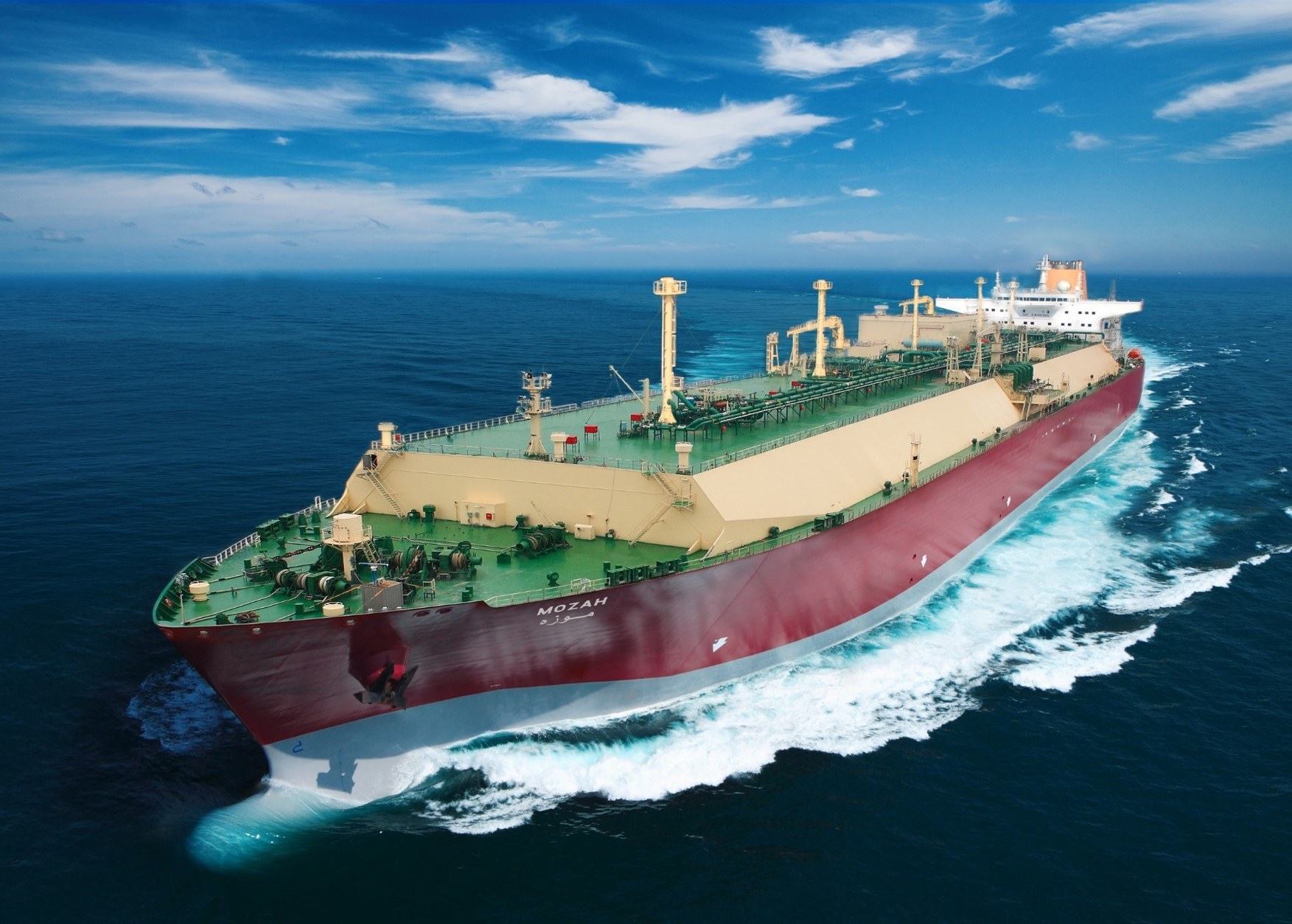
Hudong-Zhonghua has secured 36 of those ships, comprising 12 conventional 174,000-cubic-metre carriers and all 24 QC-Max vessels. China State Shipbuilding Corporation describes it as the programme’s largest builder.
The 24 QC-Max orders were placed in 2024: QatarEnergy first ordered 18 ships and added six more in September, taking the combined contract value to around US$8 billion. Steel cutting began at Hudong-Zhonghua on 9 June 2026. The QC-Max is 344 metres long, uses the NO96 Super+ membrane containment system and dual-fuel propulsion, and the 24 ships are scheduled for delivery between 2028 and 2031.
Chinese involvement extends beyond construction. QatarEnergy has selected a joint venture between Mitsui O.S.K. Lines and COSCO Shipping LNG Investment (Shanghai) to own and operate six QC-Max vessels. According to MOL, they will be delivered between 2028 and 2031 and placed on long-term charter to QatarEnergy.
For shipyards, these are newbuilding contracts. For shipowners, they create operating income that continues for years after delivery.
Chinese participation in the UAE extends from upstream equity to LNG carriers
Chinese companies are likewise involved in more than EPC in the United Arab Emirates. Following a transfer of interests by CNPC in 2020, CNOOC holds 4% in the Lower Zakum offshore concession and 4% in the Umm Shaif and Nasr concession, while PetroChina retained 6% in each. CNPC also holds 40% of Al Yasat Petroleum, with ADNOC holding the remaining 60%. Al Yasat develops a portfolio of marginal onshore and offshore assets in Abu Dhabi.
On the engineering side, ADNOC awarded an approximately US$135 million onshore crude trunk-line upgrade contract to China Petroleum Pipeline Engineering’s Abu Dhabi branch in 2020. In 2025, TA’ZIZ awarded an approximately US$1.99 billion EPC contract to China National Chemical Engineering No. 7 Construction for an integrated PVC, EDC, VCM and caustic-soda complex at Ruwais, scheduled for completion in the fourth quarter of 2028. Chinese business in the UAE now spans upstream investment, oil and gas pipelines and chemical construction.
In shipping, ADNOC Logistics & Services ordered six 175,000-cubic-metre LNG carriers from Jiangnan Shipyard in 2022 for a total of around US$1.2 billion. The first vessel, AL SHELILA, was delivered in November 2024. The sixth, AL TAWEELAH, followed in April 2026, completing the series.
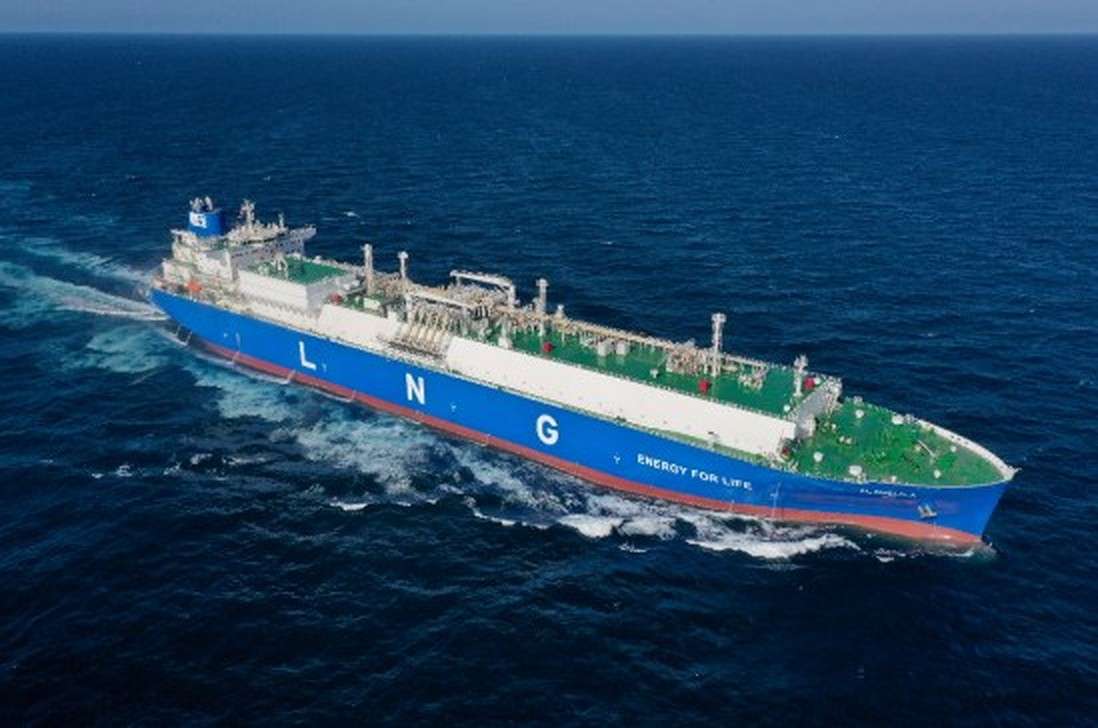
They were the first large Mark III Flex membrane LNG carriers built as a series by Jiangnan, and their delivery means Hudong-Zhonghua is no longer the only Chinese yard with a delivery track record for large LNG carriers.
The UAE has many projects, but more procurement is expected to remain local
ADNOC’s board approved US$150 billion of capital expenditure for 2026-2030 to sustain operations and drive growth. In May 2026, ADNOC said it planned to award around US$55 billion of new project contracts during 2026-2028.
Offshore work remains important. In July 2026, ADNOC took final investment decision on the US$6.2 billion Umm Shaif Gas Cap development. The programme includes three offshore EPC packages worth a combined US$5.1 billion and a US$365 million drilling and integrated-services programme covering 14 wells to be executed by ADNOC Drilling.
Foreign companies entering the UAE must also adapt to clearer local-manufacturing requirements. ADNOC introduced Local+ and ICV+ in 2026. The first Local+ list included 70 UAE manufacturers meeting the relevant technical and qualification standards. In designated priority categories, EPC contractors must give preference to technically qualified and commercially competitive UAE products, while purchases from local manufacturers can earn additional ICV credit.
This does not mean every large platform, module and vessel will move to UAE yards. A reallocation of work is more likely: large structures and sophisticated vessels requiring established yards and specialist facilities will continue to be built in Asia, while some equipment, assembly, engineering services and long-term maintenance move closer to the Middle East.
Saudi Arabia has a large project pipeline, but contractors must first enter the system
Saudi Aramco invested US$52.2 billion in 2025 and has guided to US$50-55 billion for 2026. This is company-wide capital investment, not an offshore-only budget.
Part of that investment sustains maximum crude-oil capacity of 12 million barrels per day, while another part expands the gas business. The Marjan crude increment came onstream at the end of 2025, adding 300,000 barrels per day. The Jafurah unconventional gas development began production in December 2025 and targets sales gas production of two billion standard cubic feet per day by 2030, alongside ethane and other high-value liquids.
Saudi Aramco uses long-term agreements to establish continuing relationships with selected contractors, then advances brownfield and offshore work through individual work orders.
Chinese companies have already entered some Saudi projects. China Harbour Engineering won contracts for two artificial drilling islands under the Berri increment programme, while PowerChina subsidiaries participated in construction of the manufacturing zone at the King Salman International Complex for Maritime Industries and Services. The complex is designed to build and repair large merchant ships, offshore platforms, drilling rigs and offshore support vessels.
These projects show that Chinese companies can deliver artificial islands, industrial bases and major infrastructure in Saudi Arabia. In offshore oil and gas EPCI, however, publicly disclosed direct awards from the owner are less concentrated than in Qatar. The barrier to entry is not only engineering capability; it also involves entry into Aramco’s contractor system and the establishment of local entities, labour, manufacturing and supply chains.
Chinese business in Middle Eastern oil and gas falls into at least six categories
Based on disclosed projects, Chinese participation can be divided into six broad categories.
The first is resource and project equity. Sinopec has entered Qatar’s North Field, while CNPC, PetroChina and CNOOC participate in UAE upstream assets.
The second is long-term trade. Sinopec, PetroChina and other companies have secured Qatari LNG through long-term sale and purchase agreements.
The third is oil and gas engineering. COOEC, petroleum-engineering and pipeline companies, and Chinese chemical-engineering contractors have entered offshore EPCI, pipelines and chemical projects.
The fourth is platforms, modules, materials and equipment. Chinese offshore bases and suppliers of steel, pipe, subsea cables, valves and underwater equipment are entering Middle Eastern projects through main-contract and subcontract supply chains.
The fifth is shipbuilding. Hudong-Zhonghua and Jiangnan Shipyard have secured large LNG carrier orders linked to QatarEnergy and ADNOC L&S.
The sixth is long-term vessel operation. Through its joint venture with MOL, COSCO Shipping will participate in the ownership and operation of six QC-Max vessels, extending the revenue cycle beyond delivery.
These businesses operate on different cycles. EPC income is concentrated during construction, shipyard revenue comes from building and delivery, while long-term offtake, project equity and vessel charters can continue for more than two decades.
Chinese fabrication and Middle Eastern localisation will coexist
Middle Eastern countries need the engineering and fabrication capacity available in China and elsewhere in Asia, while also seeking to retain more manufacturing, employment and supply-chain value locally.
Large offshore structures, complex modules and LNG carriers require mature yards, specialist facilities and a continuous record of project delivery. Chinese, South Korean and Southeast Asian bases will therefore remain important in the near term. Valves, electrical equipment, conventional components, some assembly work and long-term maintenance are more likely to move into the Middle East.
For Chinese companies, domestic manufacturing bases remain central to winning large structures and LNG carrier orders. Expanding engineering-contracting and after-delivery services in the Middle East will also require local procurement, service networks and partnerships.